
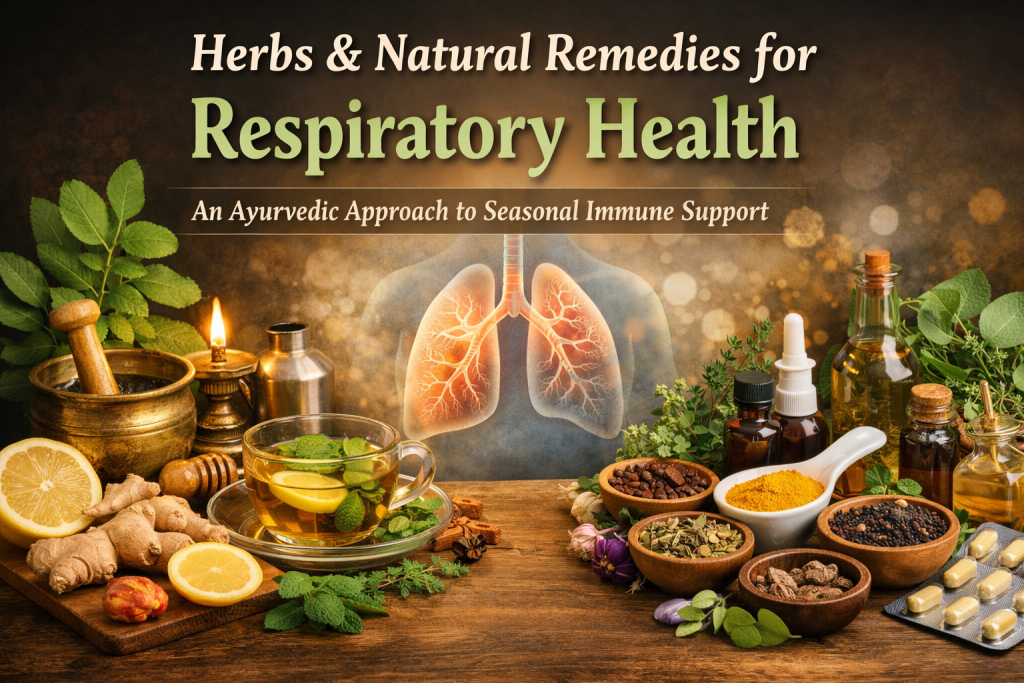
Herbs & Natural Remedies for Respiratory Health
An Ayurvedic approach to seasonal immune support
During the colder months, many people become more vulnerable to respiratory infections, sinus congestion, sore throat, cough, and lowered resistance. Children, older adults, and those who are run down are often affected more easily, especially when immunity has been weakened by poor diet, lack of sleep, recent antibiotic use, chronic congestion, or ongoing stress.
From an Ayurvedic perspective, respiratory infections become more likely when the body is already burdened by low digestive strength, accumulated toxins, poor circulation, excess mucus, and weakened immunity. When the system is strong, well nourished, and supported early, the body is often far more resilient.
The Ayurvedic View of Respiratory Vulnerability
In Ayurveda, seasonal respiratory problems often involve a combination of Kapha and Ama. Kapha contributes to mucus, heaviness, dampness, and congestion. Ama, the toxic residue of incomplete digestion, weakens the body and can make the tissues more vulnerable to infection and irritation.
Common contributing factors may include:
- weak digestion
- excess mucus and congestion
- lack of sleep
- undernourishment
- recent antibiotic use
- cold, damp, heavy foods
- sugar and processed foods
- lowered resistance from overwork or stress
Support the Body Early
One of the most important principles in natural care is to begin support early. The first signs of infection are often mild, such as an itchy throat, slight sore throat, chills, heaviness, fatigue, or increased mucus. This is the stage when simple natural measures may be most helpful.
Early support may include:
- warm lemon water with honey
- garlic and onions in food
- warming teas
- extra rest
- avoiding cold and heavy foods
- immune-supportive herbs and supplements
Foundational Natural Support
Vitamin D and Seasonal Support
During times of reduced sunlight, the body may receive less natural support from sun exposure. Traditional nutrient-rich oils such as cod liver oil have long been valued as supportive winter tonics.
Zinc and Nutrient Density
Zinc plays an important role in immune function. Whole-food sources and nutrient-dense foods are often preferred whenever possible. Nutritional yeast and other natural food sources may help support intake.
Avoid Sugar at the First Sign of Illness
Sugar and highly processed foods can make the body heavier, more congested, and less resilient. At the first sign of respiratory illness, it is often wise to remove sweets, processed foods, and cold foods immediately.
Change the Diet Quickly
Once you suspect an infection is beginning, Ayurveda generally favors a lighter, warmer, simpler diet. Heavy foods can burden digestion and increase congestion, while warm liquids and light soups are often easier for the body to handle.
A helpful approach may include:
- warm soups
- broths
- herbal teas
- lemon water
- simple cooked foods
- reduced or no solid food for a short period when appetite is low
A homemade soup with garlic, onions, olive oil, ginger, thyme, oregano, and lemon peel can be a powerful traditional support during respiratory discomfort. Garlic in particular has a long history of use as a strong natural ally.
Reduce Congestive Foods
During respiratory congestion, it is often helpful to avoid:
- dairy, except in some cases small amounts of ghee or butter
- sugar
- fried foods
- cold foods and drinks
- processed food
- heavy meals
Favorite Home Remedies
Many traditional home remedies can be used at the first sign of respiratory irritation.
- gargling with warm salt water for sore throat
- saline cleansing of the nostrils
- raw honey by the teaspoon for dry cough
- ginger tea with lemon and honey
- warm steam with eucalyptus
- extra rest and hydration
Herbal Teas and Traditional Remedies
Herbal teas are among the best natural tools for supporting the body during seasonal illness. They provide warmth, hydration, and therapeutic plant support at the same time.
A traditional immune-supportive tea may include herbs such as:
- elderflower
- yarrow
- echinacea
- goldenseal
- peppermint
- ginger
Other traditional remedies often used for respiratory support include:
- oregano oil
- olive leaf
- turmeric with honey
- tulsi
- cloves
- cinnamon
- nutmeg
- bishop’s weed
- medicinal mushrooms such as Reishi, Shiitake, and Maitake
Be Prepared Before You Need It
One of the best strategies is to keep supportive remedies on hand before illness begins. Waiting until you are already run down often means losing the best early window for natural intervention.
Useful items to keep available may include:
- garlic
- ginger
- raw honey
- lemon
- cod liver oil
- zinc
- medicinal mushrooms
- immune-supportive herbal teas
- oregano oil
- olive leaf
The Importance of Digestion and Recovery
Ayurveda teaches that recovery is not only about fighting infection. It is also about preserving strength while the body clears what it needs to clear. This means avoiding overexertion, keeping digestion light, sleeping more, and not rushing back into heavy foods too early.
In many cases, probiotics and fermented foods may also be helpful after illness or after antibiotic use, especially when digestion and gut flora need rebuilding.
A Personalized Ayurvedic Approach
Not every respiratory illness is the same. Some are more cold and congestive. Others involve more heat, dryness, irritation, or exhaustion. Some people need stronger antimicrobial herbs, while others need more warming, decongesting, or rebuilding support.
Ayurvedic and herbal recommendations are best individualized according to:
- constitution
- strength of digestion
- degree of congestion
- stage of the condition
- whether the pattern is more hot, cold, wet, or dry
Zoom Consultations
If you want to strengthen your immune system, improve resistance, or get more personalized natural support for recurring respiratory infections, consultations are available by Zoom.
Herbal products are mailed after the consultation.

The articles, videos, and past recordings on this website form a historical educational archive of Khabir Southwick’s teaching. They are provided solely for educational and historical reference, especially to help readers learn about Ayurveda and other traditional approaches to health. They are not health advice, medical advice, diagnosis, treatment, or instructions for self-treatment.
The information may contain errors, omissions, or limitations, and Khabir Southwick remains open to correction as his understanding of Ayurveda continues to develop.
For individual health concerns, seek guidance from a qualified healthcare practitioner or doctor who can properly evaluate your personal circumstances.