
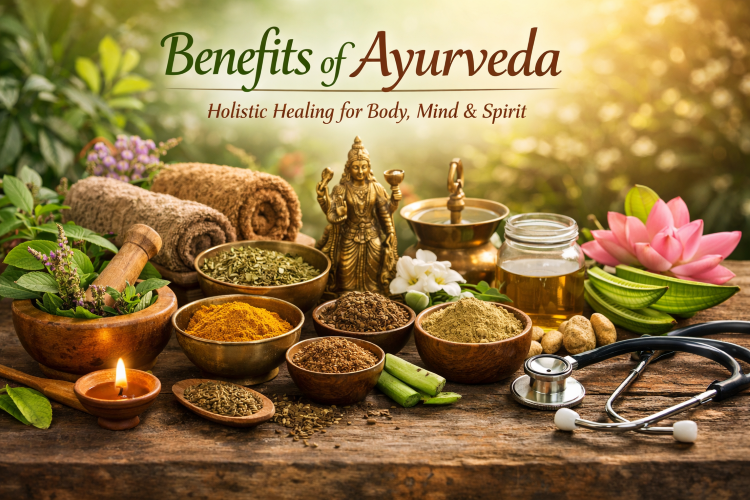
Benefits of Ayurveda
A deeper, more individualized approach to health
Ayurveda offers a broader way of understanding health—one that looks beyond symptoms alone and considers the whole person. It is a traditional system of natural health care that places strong emphasis on root causes, daily habits, digestion, constitution, mental-emotional balance, and long-term prevention.
Rather than relying on one-size-fits-all solutions, Ayurveda approaches each person as an individual. The goal is to understand the deeper pattern behind imbalance and then use diet, lifestyle, herbal support, and natural therapies to help restore order, resilience, and vitality.
General Benefits of Ayurvedic Care
When applied properly, Ayurvedic care may help support:
- stronger immunity and better resistance
- improved digestion and more complete elimination
- a calmer, steadier nervous system
- reduced stress and anxiousness
- deeper, easier sleep
- healthier bones, nails, and hair
- better energy and improved vitality
- a stronger sense of balance and well-being
How Ayurveda Helps
Ayurveda is one of the world’s oldest systems of natural health care. Its principles were developed through centuries of observation, experience, and careful documentation of how food, herbs, minerals, routines, climate, and behavior affect the human body and mind.
This tradition provides a detailed framework for understanding how imbalance develops. In Ayurveda, this process of disease formation is known as Samprapti. By understanding how an imbalance begins, deepens, and spreads, the practitioner is better able to choose the right corrective measures.
An Ancient Science Applied to Modern Life
Ayurveda remains highly relevant because its principles are based on nature and human function, not passing trends. Digestion, sleep, stress, overwork, poor food choices, irregular routine, environmental burden, and nervous system depletion are still major causes of imbalance today, just as they were in earlier times.
Ayurveda offers a practical framework for addressing these modern problems through timeless principles such as:
- strengthening digestion
- improving elimination
- choosing foods according to the individual
- aligning with daily and seasonal rhythms
- reducing toxic burden
- calming the mind and nervous system
- supporting the body with herbs and natural therapies
Root-Cause Thinking
A major difference in Ayurveda is its emphasis on root cause. Proper care begins by asking why the imbalance developed in the first place.
This may involve looking at:
- constitutional tendencies
- digestive strength
- elimination patterns
- sleep quality
- stress level
- past habits
- seasonal influences
- food choices
- daily routine
- long-term depletion or accumulation
Individualized, Not One-Size-Fits-All
Ayurveda does not treat everyone the same way. Two people with similar symptoms may need very different recommendations depending on their constitution, digestion, energy, age, routine, and the doshic pattern involved.
Recommendations may include:
- a more suitable diet
- daily routine changes
- seasonal adjustments
- herbal formulas
- movement or yoga
- breathing practices
- meditation
- home remedies
- cleansing or detoxification when appropriate
Prevention Is Central
One of the classical goals of Ayurveda is the preservation of health in the healthy. Prevention is not secondary in Ayurveda—it is central.
Through proper food, routine, sleep, digestion, stress management, and seasonal care, Ayurveda aims to reduce the likelihood that imbalance will become more serious over time. In this way, Ayurveda is not only a system of correction, but a system of preservation.
A Broader View of Health
Ayurveda sees health as more than the absence of symptoms. It includes balance in the body, steadiness in the mind, proper function of the senses, healthy digestion and elimination, emotional clarity, and a deeper sense of inner well-being.
An Ayurvedic intake often explores much more than the immediate complaint. It may look at long-standing patterns in digestion, sleep, stress, energy, appetite, elimination, emotional tendencies, daily rhythm, and lifestyle. This broader view often helps uncover deeper factors that may otherwise be missed.
Practical Tools You Can Use
Ayurveda is valuable not only because it offers support, but because it teaches people how to support themselves better. A well-trained practitioner can provide practical tools that often continue helping long after the appointment.
- food guidelines that better fit your constitution
- daily habits that improve energy and digestion
- seasonal adjustments to reduce imbalance
- herbs chosen for your individual pattern
- simple home remedies
- lifestyle changes that strengthen long-term resilience
A More Empowering Approach
Ayurveda does not aim to simply “fix” a person. It aims to help the person understand what is creating imbalance and what supports balance. In that sense, it is both educational and therapeutic.
By learning how your body responds to food, routine, stress, climate, and lifestyle, you become better equipped to care for yourself in a lasting way. This can reduce confusion, build confidence, and create a more stable foundation for health over time.
Timeless and Still Relevant
Grounded in enduring, nature-based principles, Ayurveda remains as relevant today as it was thousands of years ago. Its value lies not only in its age, but in its depth, logic, and ability to help people reconnect with the rhythms and habits that support real health.
Ayurveda offers a path toward better digestion, stronger resilience, greater balance, and a more intelligent relationship with your own body and mind.

The articles, videos, and past recordings on this website form a historical educational archive of Khabir Southwick’s teaching. They are provided solely for educational and historical reference, especially to help readers learn about Ayurveda and other traditional approaches to health. They are not health advice, medical advice, diagnosis, treatment, or instructions for self-treatment.
The information may contain errors, omissions, or limitations, and Khabir Southwick remains open to correction as his understanding of Ayurveda continues to develop.
For individual health concerns, seek guidance from a qualified healthcare practitioner or doctor who can properly evaluate your personal circumstances.