
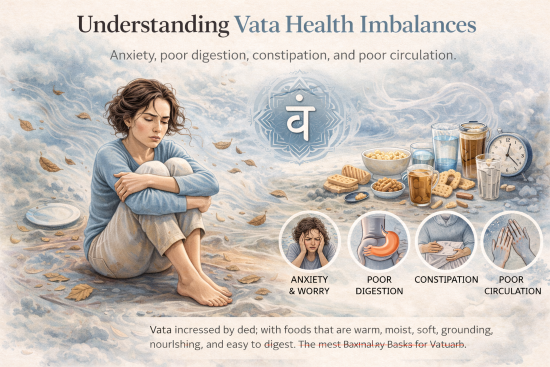
Understanding Vata Health Imbalances
Anxiety, poor digestion, constipation, and poor circulation
Vata dosha is made up of the qualities of air and ether. It governs movement throughout the body and mind, including the nervous system, circulation, breathing, elimination, sensory activity, speech, and mental activity. When Vata is balanced, it supports creativity, enthusiasm, alertness, flexibility, healthy movement, and quick understanding. But when Vata becomes excessive, it can create anxiety, fear, dryness, constipation, poor digestion, poor circulation, restlessness, insomnia, and instability in both body and mind.
From an Ayurvedic perspective, many common modern conditions reflect aggravated Vata. These may include nervousness, anxiousness, gas, bloating, variable appetite, dry skin, constipation, cold hands and feet, insomnia, irregular digestion, muscle tightness, poor circulation, scattered thinking, and a tendency toward exhaustion from overactivity. Vata excess can also affect the emotions, leading to worry, insecurity, overthinking, and a sense of being ungrounded.
The Nature of Vata Imbalance
Vata is naturally light, dry, cold, rough, subtle, mobile, and irregular. When these qualities become too strong, the body begins to lose steadiness and nourishment. Digestion becomes less stable, elimination becomes more difficult, circulation weakens, and the mind may become overly active.
Signs of high Vata may include:
- anxiety and nervousness
- overthinking
- poor digestion
- gas and bloating
- constipation
- dry skin and dryness in the body
- cold hands and feet
- poor circulation
- insomnia or light sleep
- fatigue with restlessness
- muscle tightness or spasms
- irregular appetite
- scattered focus or mental instability
Common Causes of Vata Aggravation
Vata is increased by anything that is cold, dry, light, irregular, excessive, or overstimulating. This includes both food and lifestyle.
Common causes include:
- skipping meals
- eating dry or cold foods
- eating too little
- excessive fasting
- too much travel
- too much talking or mental activity
- lack of routine
- insufficient sleep
- overwork
- excessive exercise
- fear, worry, and instability
- exposure to cold and wind
- long periods of stress or depletion
Dietary Principles for Vata
Vata types generally do best with foods that are warm, moist, soft, grounding, nourishing, and easy to digest. The most balancing tastes for Vata are:
- sweet
- sour
- salty
These tastes help retain moisture, build strength, calm the nervous system, and counter the dryness and instability of Vata.
Vata should reduce foods with the tastes:
- bitter
- astringent
- pungent
Best Foods for Vata
Vata individuals generally benefit from eating more regularly than Pitta or Kapha types. Their digestion often improves when meals are warm, soft, oily enough, and consistent in timing.
Vegetables
Vata does best with cooked, moist, easy-to-digest vegetables rather than large amounts of raw vegetables. Helpful choices may include carrots, squash, zucchini, sweet potatoes, beets, asparagus, green beans, cooked leafy greens in moderation, pumpkin, and okra. Large raw salads, dry vegetables, and excessively bitter vegetables are usually less ideal for aggravated Vata.
Legumes
Vata can do well with legumes when they are well cooked, spiced properly, and taken in moderation. Better choices may include mung beans, red lentils, split mung dal, and small amounts of split peas if digestion tolerates them.
Fruits
Vata usually does well with sweet, ripe, and moist fruits. Better options may include ripe bananas in moderation, mango, dates, figs, cooked apples, pears, soaked raisins, papaya, and avocado.
Grains
Vata often benefits from grains more than Kapha does, especially when digestion is weak and the body is depleted. Good choices often include basmati rice, oats, cream of rice, wheat if tolerated, quinoa in moderation with oil, and well-cooked grain porridges.
Foods Vata Should Reduce or Avoid
Vata types usually do poorly with foods that are cold, dry, light, rough, and hard to digest. These foods tend to worsen gas, constipation, anxiousness, and depletion.
- cold food and drinks
- raw salads in excess
- crackers and dry cereals
- popcorn
- dry toast
- large amounts of beans without oils and spices
- excessive bitter vegetables
- very spicy foods in excess
- too much caffeine
- frozen food
- highly processed food
- irregular snacking instead of proper meals
- overly light dieting or fasting
Animal Protein and Vata
Vata individuals often tolerate moderate amounts of nourishing protein better than Kapha or aggravated Pitta types, especially when they are depleted, weak, or underweight. However, food should still be easy to digest and properly prepared. Soups, stews, broths, and warm meals are usually more suitable than dry grilled foods or cold protein-heavy meals.
Sweeteners and Vata
Vata is not aggravated by natural sweet taste in the same way Kapha is. In fact, sweet taste is one of the most balancing tastes for Vata when used moderately and wisely. Warm, nourishing foods with mild sweetness can help calm the nerves and build stability. However, this does not mean excessive refined sugar is healthy. Vata usually does best with natural sweetness from whole foods and moderate wholesome sweeteners rather than processed sweets.
The Importance of Oils, Warmth, and Digestive Spices
Vata needs warmth, moisture, and gentle stimulation. One of the most important ways to reduce Vata is through the proper use of oils and digestive spices.
Vata generally benefits from moderate use of herbs and spices such as:
- ginger
- cumin
- fennel
- cinnamon
- cardamom
- ajwain
- hing in small amounts
- black pepper in moderation
Healthy oils and fats are also important for Vata because they counter dryness and support the nervous system. Meals often improve when they include ghee, olive oil, sesame oil, or other suitable fats in moderation.
Vata and Stimulants
Vata individuals are usually very sensitive to stimulation. Too much coffee, too much talking, too much screen time, too much travel, or too much mental activity can quickly push Vata further out of balance. Excess stimulants may worsen anxiety, insomnia, restlessness, palpitations, dry digestion, scattered thinking, and nervous exhaustion.
Lifestyle for Vata Balance
Vata is not balanced by more movement, more irregularity, or more multitasking. It is balanced by routine, warmth, nourishment, grounding, rest, and emotional safety.
Helpful lifestyle measures include:
- keeping regular meal times
- going to sleep on time
- waking at a consistent hour
- eating warm cooked meals
- reducing overstimulation
- oil massage
- gentle yoga
- breathing practices that calm the nerves
- spending time in a quiet environment
- maintaining stable routine and relationships
- avoiding overwork and overexertion
Vata and Digestive and Circulatory Patterns
Vata often accumulates in the colon, nervous system, bones, ears, and lower body. This is one reason Vata imbalance is so often connected with:
- constipation
- gas and bloating
- irregular digestion
- dry stools
- lower abdominal discomfort
- anxiety
- insomnia
- poor circulation
- cold extremities
- variable energy
- nervous exhaustion
In these cases, treatment usually focuses on warming the body, moistening dryness, calming the nervous system, supporting the colon, improving circulation, and providing deeper nourishment.
The Ayurvedic Goal for Vata
The goal in treating Vata is not simply to remove symptoms like anxiety or constipation, though those may improve. The deeper goal is to restore groundedness, warmth, regularity, nourishment, healthy elimination, and nervous system stability in both body and mind.
When Vata is reduced properly, people often feel:
- calmer
- more grounded
- less anxious
- warmer
- better digested
- more regular in elimination
- more emotionally steady
- better rested
- stronger and more nourished
Ayurveda teaches that Vata can become a great strength when balanced. It gives creativity, inspiration, movement, quickness, and sensitivity. But when excessive, it creates instability and depletion. The right diet, oils, habits, and grounding lifestyle can help transform Vata from anxious movement into healthy flow.

The articles, videos, and past recordings on this website form a historical educational archive of Khabir Southwick’s teaching. They are provided solely for educational and historical reference, especially to help readers learn about Ayurveda and other traditional approaches to health. They are not health advice, medical advice, diagnosis, treatment, or instructions for self-treatment.
The information may contain errors, omissions, or limitations, and Khabir Southwick remains open to correction as his understanding of Ayurveda continues to develop.
For individual health concerns, seek guidance from a qualified healthcare practitioner or doctor who can properly evaluate your personal circumstances.