
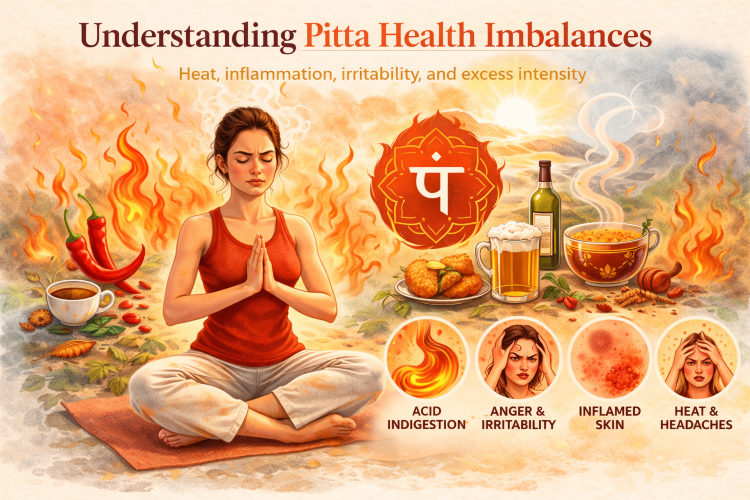
Understanding Pitta Health Imbalances
Heat, inflammation, irritability, and excess intensity
Pitta dosha is made up of the qualities of fire and a small amount of water. It governs digestion, metabolism, body temperature, transformation, appetite, sharpness of mind, and the body’s ability to process both food and experience. When Pitta is balanced, it supports intelligence, courage, healthy digestion, ambition, clarity, and good discrimination. But when Pitta becomes excessive, it can create heat, inflammation, acidity, irritability, burning sensations, skin flare-ups, loose stools, intensity, and inflammatory patterns throughout the body.
From an Ayurvedic perspective, many common modern conditions reflect aggravated Pitta. These may include acid indigestion, heartburn, loose stools, inflammatory skin issues, irritability, anger, hot flashes, burning urination, inflammatory liver patterns, headaches driven by heat, and a general tendency toward excess intensity in both body and mind. Pitta excess can also affect the emotions, leading to criticism, impatience, frustration, and a tendency to push too hard.
The Nature of Pitta Imbalance
Pitta is naturally hot, sharp, light, slightly oily, penetrating, spreading, and intense. When these qualities become too strong, the body begins to overheat. Digestion may become too sharp, the tissues may become irritated, and inflammatory processes may increase.
Signs of high Pitta may include:
- acid reflux or heartburn
- burning digestion
- loose stools or frequent bowel movements
- excessive hunger or thirst
- overheating or heat intolerance
- irritability and anger
- inflammatory skin rashes or redness
- acne or hives
- headaches associated with heat
- burning urination or strong body odor
- hot flashes or excess body heat
- inflamed eyes or sensitivity to light
Common Causes of Pitta Aggravation
Pitta is increased by anything that is hot, sharp, oily, sour, salty, or overly intense. This includes both food and lifestyle.
Common causes include:
- spicy foods
- fried foods
- sour foods
- too much salt
- fermented foods in excess
- alcohol
- excessive coffee or stimulants
- skipping meals and then overeating
- working under constant pressure
- excessive sun or heat exposure
- anger, frustration, and competitiveness
- lack of cooling rest
- pushing too hard physically or mentally
Dietary Principles for Pitta
Pitta types generally do best with foods that are cooling, calming, moderately dry, less oily, and not overly stimulating. The most balancing tastes for Pitta are:
- sweet
- bitter
- astringent
These tastes help cool the body, reduce irritation, calm inflammation, and soften excess sharpness.
Pitta should reduce foods with the tastes:
- pungent
- sour
- salty
Best Foods for Pitta
Pitta individuals generally benefit from meals that are nourishing but not overheating. Their digestion is often strong, but if they eat too many heating foods, that same strong digestion can turn into excess acid and inflammation.
Vegetables
Most cooling and less pungent vegetables are helpful for Pitta, especially leafy greens, asparagus, zucchini, cucumber, broccoli, cauliflower, green beans, celery, Brussels sprouts in moderation, cilantro, and bitter greens. Very hot peppers, too much garlic, too much onion, and heavily fried vegetables are usually less ideal for aggravated Pitta.
Legumes
Pitta generally does well with mung beans, red lentils, split peas, garbanzo beans, and small amounts of other beans when well cooked and not made too spicy.
Fruits
Pitta usually does well with sweet and cooling fruits such as pears, apples, sweet grapes, pomegranate, melon, mango in moderation, berries, and figs. Very sour fruits and citrus in excess may aggravate Pitta in some cases.
Grains
Good grain choices often include basmati rice, oats, barley, quinoa, and moderate amounts of wheat if digestion tolerates it. The main issue for Pitta is usually not grain itself, but overly spicy, greasy, or sour meals.
Foods Pitta Should Reduce or Avoid
Pitta types usually do poorly with foods that are hot, sharp, sour, salty, and excessively oily. These foods tend to worsen acidity, inflammation, skin problems, and emotional intensity.
- hot peppers
- excessive garlic
- excessive onions
- fried foods
- greasy foods
- excessive tomatoes
- vinegar
- pickles
- alcohol
- excess coffee
- fermented foods in excess
- very sour fruits
- salty snacks
- excessive cheese
- very spicy sauces
Animal Protein and Pitta
Pitta individuals often need less heavy animal food than they think, especially when there is inflammation, skin irritation, liver congestion, or acidic digestion. Too much meat, especially red meat or heavily seasoned meat, can increase heat and irritability. Many Pitta people do better with a diet that emphasizes vegetables, grains, legumes, and lighter proteins rather than large amounts of rich animal protein.
Sweeteners and Pitta
Pitta is not aggravated by sweet taste in the same way Kapha is, but refined sugar is still not helpful. Pitta generally does best with mild, moderate sweet taste from whole foods rather than excessive sweets. Cooling natural sweetness from fruits and simple foods is usually more balancing than heavy desserts, processed sweets, or overly rich baked foods.
The Importance of Cooling Herbs and Spices
Pitta does not usually need strong stimulation. It needs guidance toward cooling, calming, and soothing support.
Pitta generally benefits from moderate use of herbs and spices such as:
- coriander
- cilantro
- fennel
- cardamom
- turmeric in moderate amounts
- mint
- cumin in moderation
Very hot spices such as cayenne, large amounts of black pepper, and excessive ginger may aggravate Pitta when heat is already high. Cooling digestive herbs are especially important for Pitta types because they help support digestion without increasing inflammation.
Pitta and Stimulants
Pitta individuals often enjoy stimulation because they are naturally driven, focused, and intense. But excess stimulants can quickly worsen Pitta. Too much coffee, alcohol, work pressure, or competitive pushing can intensify irritability, acid digestion, heat, headaches, impatience, and sleep disturbance.
Lifestyle for Pitta Balance
Pitta is not balanced by more pressure, more ambition, or more heat. It is balanced by cooling, moderation, relaxation, patience, and emotional softness.
Helpful lifestyle measures include:
- keeping regular meal times
- not skipping meals
- avoiding overwork
- reducing excessive sun exposure
- cooling exercise rather than extreme exercise
- spending time in nature
- practicing patience
- making space for rest and enjoyment
- avoiding unnecessary arguments
- learning to release perfectionism
Pitta and Inflammatory Patterns
Pitta often accumulates in the small intestine, blood, liver, skin, and eyes. This is one reason Pitta imbalance is so often connected with:
- acid indigestion
- ulcers or burning digestion patterns
- inflammatory liver stress
- skin inflammation
- acne, hives, or rashes
- red eyes
- anger and frustration
- hot flashes
- burning urinary discomfort
- headaches driven by heat
In these cases, treatment usually focuses on cooling the system, reducing inflammatory foods, calming the liver, softening excess intensity, and supporting elimination without overheating the body further.
The Ayurvedic Goal for Pitta
The goal in treating Pitta is not simply to remove symptoms of heat, though those may improve. The deeper goal is to restore coolness, steadiness, patience, balanced digestion, and healthy metabolism in both body and mind.
When Pitta is reduced properly, people often feel:
- cooler
- calmer
- less reactive
- less inflamed
- more emotionally steady
- more comfortable in digestion
- more patient
- clearer without being intense
Ayurveda teaches that Pitta can become a great strength when balanced. It gives intelligence, courage, leadership, insight, and strong digestion. But when excessive, it creates irritation and conflict. The right diet, herbs, habits, and cooling lifestyle can help transform Pitta from inflammation into clear and healthy fire.

The articles, videos, and past recordings on this website form a historical educational archive of Khabir Southwick’s teaching. They are provided solely for educational and historical reference, especially to help readers learn about Ayurveda and other traditional approaches to health. They are not health advice, medical advice, diagnosis, treatment, or instructions for self-treatment.
The information may contain errors, omissions, or limitations, and Khabir Southwick remains open to correction as his understanding of Ayurveda continues to develop.
For individual health concerns, seek guidance from a qualified healthcare practitioner or doctor who can properly evaluate your personal circumstances.